Organic vs Paid Social Media: What Should You Focus On?
Organic and paid social media are two key strategies businesses use to grow online. This blog explains the differences between them and how to decide which approach works best for your marketing goals.
Meenakshi Nair
3/1/20263 min read
Social media is not about making people know who you are anymore. It is an important part of your business that helps people understand you, trust you, and want to buy from you. Many businesses are still trying to figure out how to work with social media. Should they try to get people to notice them on social media channels without paying for it, or should they spend money on ads or popular faces to get more people to see them? Social media is a deal, and businesses need to think carefully about how to use it.
Social media is getting really competitive. The thing is organic social media and paid social media are both useful for different things when you are making a plan for marketing. Organic social media and paid media have different jobs to do.
Understanding how each works, and when to prioritize one over the other is essential for sustainable growth.
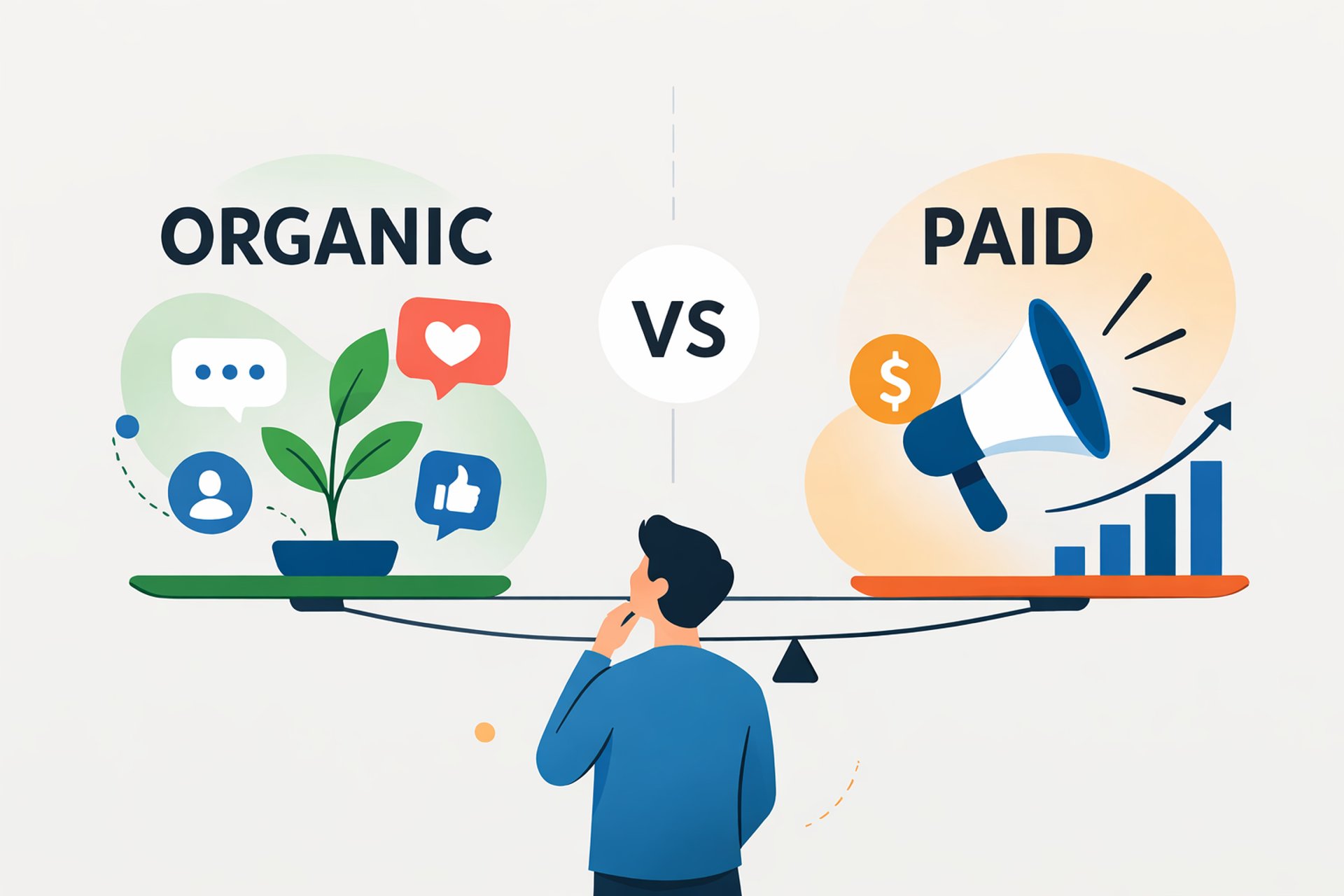
Organic vs Paid Social Media: What Should You Focus On?
What is Organic Social Media?
Organic social media refers to unpaid content shared on platforms such as Instagram, LinkedIn, Facebook, and X. This includes posts, reels, carousels, stories, and regular audience engagement.
Organic content forms the foundation of your brand presence. It communicates your values, expertise, and positioning without relying on advertising budgets.
Benefits of Organic Social Media
Builds long-term brand credibility
Establishes authority in your niche
Encourages genuine engagement
Strengthens customer relationships
Supports overall digital marketing visibility
Organic social media allows businesses to create familiarity. Over time, this familiarity builds trust, influencing purchasing decisions.
Limitations of Organic Social Media
Declining reach due to algorithm changes
Slower audience growth
Requires consistency and content planning
Results take time to compound
Organic growth is sustainable, but it rarely delivers immediate results.
What is Paid Social Media?
Paid social media involves promoting content through advertisements. This includes sponsored posts, display ads, lead generation campaigns, and retargeting ads.
Through social media advertising, businesses can target specific demographics, behaviors, and interests. Unlike organic reach, paid campaigns provide greater control over visibility and scale.
Benefits of Paid Social Media
Immediate exposure and reach
Advanced audience targeting options
Measurable performance metrics
Faster lead generation and conversions
Scalable campaign growth
Paid social media is particularly effective for product launches, promotional campaigns, and businesses focused on rapid expansion.
Limitations of Paid Social Media
Requires consistent financial investment
Results stop when campaigns pause
Performance depends on strong creatives and targeting
Low brand familiarity can reduce ad effectiveness
Paid campaigns can drive traffic quickly, but they perform significantly better when supported by a strong organic presence.
Organic vs Paid Social Media: Key Differences
When comparing organic vs paid social media, the primary difference lies in speed and intent.
Organic social media builds brand equity gradually. It focuses on relationship-building, thought leadership, and community growth.
Paid social media increases visibility and conversions. It focuses on performance metrics such as clicks, leads, and sales.
Organic builds trust. Paid drives action.
Both play critical roles within a complete social media marketing strategy.
When Should You Focus on Organic Social Media?
You should prioritize organic social media if:
You are building brand awareness from the scratch
Your budget is limited
You want to establish authority in your industry
Your goal is long-term trust building rather than short-term sales
You want to nurture audience relationships
Organic efforts are essential for businesses that want to create lasting brand value.
When Should You Invest in Paid Social Media?
You should invest in paid social media when:
You need immediate traffic or leads
You are launching a new product or service
You want to scale beyond organic reach limitations
You have validated messaging that converts
You are running time-sensitive campaigns
Paid social media is highly effective when the goal is measurable growth and conversion-focused performance.
The Most Effective Strategy: Combining the Both Together
The strongest brands in 2026 do not choose between organic and paid. They integrate both.
A structured approach to social media marketing often follows this process:
Build consistent, high-quality organic content
Identify posts that perform well organically
Turn those high-performing posts into paid campaigns
Retarget users who have already engaged
Continuously optimize based on performance data
This approach allows organic social media to build trust while paid social media accelerates conversions.
The question is not whether organic social media is better than paid social media.
The real question is how both can work together to support your business goals.
Organic social media builds brand equity over time.
Paid social media delivers speed and performance.
Businesses that align both within a structured marketing framework achieve stronger engagement, higher ROI, and long-term growth.
Connect with us and start your digital growth journey
Let’s build something impactful together.
Phone
viksitdigi@gmail.com
+91 8657807380
© All rights reserved.
Address
137, Mazegaon, Kalyan, Mumbai, 40001